
Care ·
How to Wash a Hoodie Without Shrinking It
Heat shrinks a hoodie, not water. How to wash, dry and store heavy cotton cold, and how to get some length back if it already shrank.
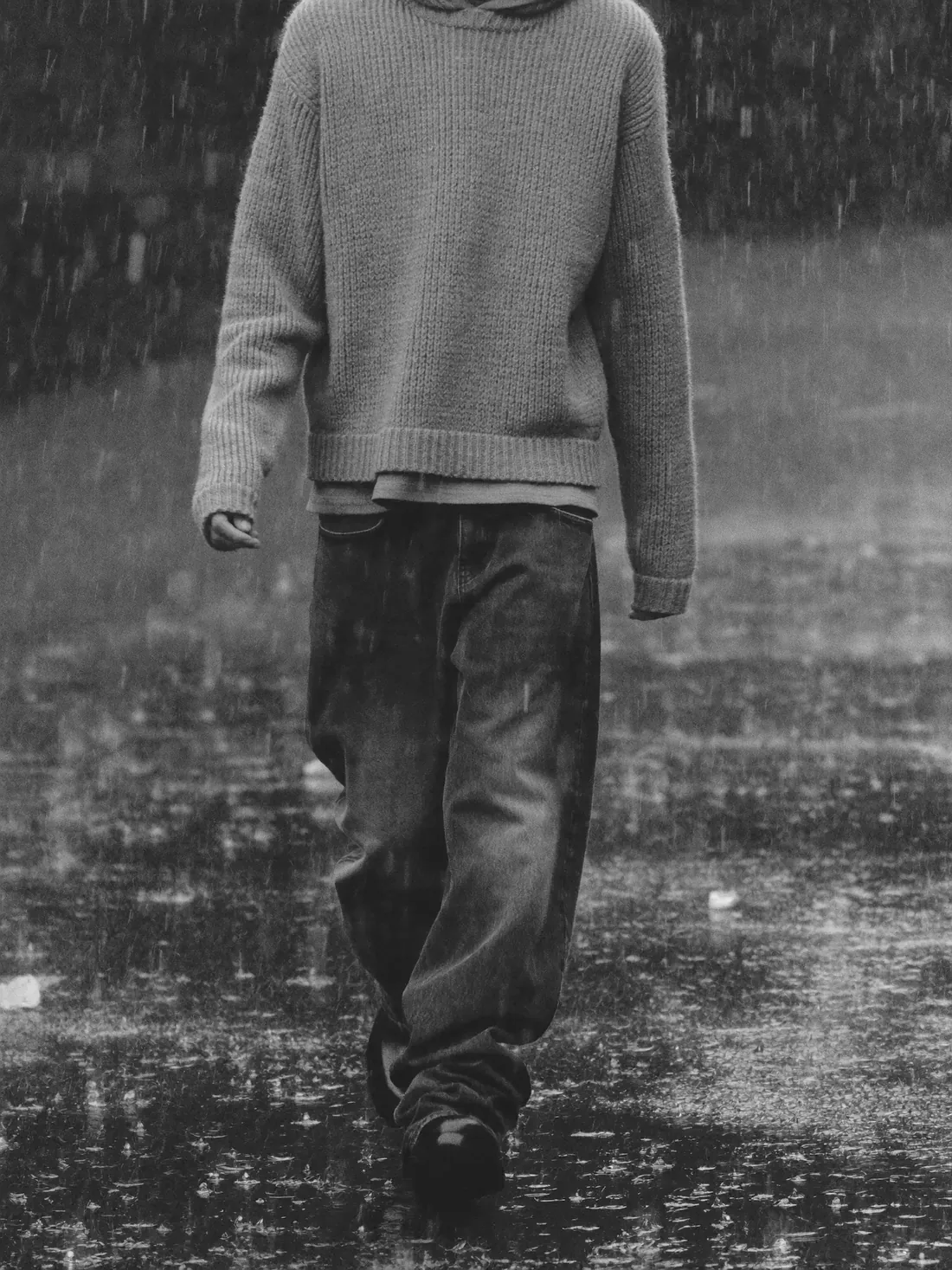
Almost every ruined hoodie was ruined in the same ten minutes: a hot wash, then a hot dryer. Cotton doesn't shrink because it got wet. It shrinks because heat lets the fibres relax back toward the length they held before the mill stretched them, and agitation locks them there.
Why cotton shrinks
Knitting puts yarn under tension, so the cloth holds a shape it would rather not hold. Heavy loopback has more yarn in it, so more to move. A 480gsm hoodie that gets cooked loses more length than a thin one. Gsm is grams per square metre, the weight of the cloth.
Heat does the work, so the method is one instruction: take the heat out.
Read the label first
Two hoodies at the same weight behave differently in the drum, and the label says why: fibre content, and the temperature the maker will stand behind. Cotton relaxes with heat, polyester doesn't, so a blend gives up less on the same cycle. 100% cotton has the most to lose. A pre-shrunk tag doesn't change the method. What pre-shrunk does cover.
The first wash
Most of the movement comes out early. Wash a new one cold, alone or with a like colour, and don't judge the fit until it's dry. Dark cotton gives up loose dye for a few cycles, so keep a new black one out of a mixed drum.
A new one feels stiff. That's the cloth, not the fit, and it softens with wear, not washing.
The fluff, and where it ends up
A new heavy hoodie sheds. Short fibre ends sit loose in the yarn, the brushed inside holds most of them, and the first washes carry them out. It stops on its own.
- Run the first two washes alone. The fluff lands on anything dark in with it.
- Clear the lint filter. A blocked filter means a longer dry, and a longer dry means more heat.
Before it goes in the drum
- Empty the pockets and shake out the grit. A pen costs the whole load, and sand in the knit rubs the face all cycle.
- Check what goes in with it. One loose zip does more to a heavy knit than the cycle does.
- Check the seams while it's dry. A small split at the shoulder opens further in the drum.
The wash
- Turn it inside out. The inside takes the abrasion, and heat plus rubbing cracks a print. Why that side goes out.
- Cold water, 30C or below. The one that matters. Cold gets a hoodie clean.
- Gentle or normal, not heavy duty. Long agitation drags fibres up and rolls them into pills.
- Do up the zip, tie the drawcord. Open teeth drag across the cloth, and a loose cord works out of its channel.
- Less detergent than you think. Half a cap. Excess doesn't rinse out and leaves the cloth stiff and grey.
- No fabric softener. It coats the fibres, kills absorbency and makes cotton feel slick, not soft.
- Get it out of the drum. Wet cotton left in a warm machine goes sour and sets creases.
The machine, and the load
An older top loader with a central agitator is rougher on heavy knit than a front loader's tumble. A packed drum can't move water through the load, so detergent stays in and the cloth dries stiff. One heavy hoodie and two light things is a full load. Spin it hard if you're air drying. Hours off the rail.
Washing one by hand
No machine, or a hoodie you'd rather keep out of one. A sink does the job.
- Dissolve the detergent first. Neat on dry cotton it leaves a pale patch.
- Ten minutes in cool water. Press it under, leave it, press again. Soaking does what agitation does in a drum, without the rubbing.
- Rinse twice, or until it runs clear. Suds left in the knit dry stiff.
- Press, don't wring. Lift it in both hands. Wet 480gsm hanging off one shoulder pulls that shoulder out of shape.
The water you're washing in
Two people follow the same list and get different cloth back. Hard water is usually why. Dissolved minerals tie up detergent instead of lifting dirt, and the residue sits in the knit, so the cloth comes back scratchy and dull. The tell is timing: it arrives slowly, across everything in the house. More detergent makes it worse. Less, and a second rinse, gets you closer.
Keeping black black
Fade is a separate problem, but the fixes pull the same way. Dye leaves cotton by two routes: hot water, and rubbing at the surface. A cold, short, inside out cycle covers both. Sunlight does the rest, so dry a black one out of direct light.
Black shows every fault. Loose fibre off the face reads as grey haze, and residue reads as chalk. Half of what looks like fading is surface, so take the pills off and look again in daylight.
The dry, the part that kills it
Air dry. Lay it flat or hang it over a rail, not a narrow hanger, which stretches a wet hoodie's shoulders. Once the shoulders go they don't come back. If a dryer is the only option, use the lowest heat and take it out damp. Most of the shrinkage lands in the last ten minutes, when the cloth is dry and still tumbling in heat. Moving air does more than warmth.
- Turn it once. Pull the cuffs and waistband back to shape while damp, and square the side seams. Damp is the only time you get a say.
- Keep it off the radiator. That's dryer heat by another route.
Drying it indoors in winter
Half the year the rail is the only option, in a heated room. Heated air is dry air, so a hoodie left overnight comes off crisp at the cuffs and charged with static. Softener is the usual fix, and the same mistake by another name. Move air instead of adding heat, and give it room. Folded double in a shut bathroom, heavy cotton stays wet long enough to smell.
Creases and snags
Spun hard and left folded over a rail, a hoodie comes off with a line across the chest. A hot iron is the same problem in a smaller dose.
- Hang it in the steam. A running shower drops most rail creases without touching the cloth.
- If you must iron, iron damp and inside out. Low setting, with a cloth over any print.
- Don't cut a pulled loop. A snag is yarn pulled out of the knit, not a broken thread. Work it back through from the inside with a blunt needle.
Pills, and what to do about them
A pill is loose surface fibre rolled into a ball by rubbing. Pills turn up in the same places: cuffs, inside the sleeve, wherever a bag strap sits. Cut them off rather than pulling, which drags a loop out of the knit. A fabric comb or a cheap razor held flat, worked dry, takes only what stands proud.
Spot cleaning
One mark isn't a reason for a full cycle. Work from the back with a cloth under the face, blotting out to the edge.
- Sweat and blood: cold water only. Heat sets protein stains, and a set stain is hard to shift.
- Grease and food: a drop of dish soap worked in with a fingertip, left a few minutes, rinsed cold.
Putting it away
Put it away clean. Sweat and sugar left in cotton for months darken into a mark. Cool to the touch is not dry, so give it a day longer than you think. Fold it. Months on a hanger is the hoodie's own weight pulling at the shoulders.
If it already shrank
You can usually get some of it back. Soak it in cool water with a capful of hair conditioner for half an hour to relax the fibres. Lay it flat while damp, stretch it back from the hem and the sleeves, then dry it in that shape. Better odds on a first offence than on one cooked ten times.
Wash it less
Heavy sweats don't need washing after every wear. Air it overnight, spot clean what's dirty, and wash it when it needs it. Every cycle is wear, and the cloth has only so many in it. If airing isn't shifting a smell, a hotter wash is still wrong. Cloth that never quite dries out is the likelier culprit.
The short version
- Cold wash, 30C or below, inside out, zip done up.
- Half a cap of detergent. No softener.
- Gentle or normal cycle, with room in the drum.
- Air dry flat or over a rail, off the radiator.
- Reshape while damp. Fold to store.
The short version also lives on our care page. If something goes wrong past the point of laundry, write to us.